Chelsea, Massachusetts

A city
in motion.

Four centuries compressed into less than two square miles: harbor, industry, immigration, fire, fiscal crisis and reinvention.

Across from Boston

A small geography carrying the weight of a much larger American story.

The long view

Opportunity arrived with a cost.

Industrial growth created work, density and possibility. It also brought difficult labor and environmental consequence. The tension between promise and reality is the story.

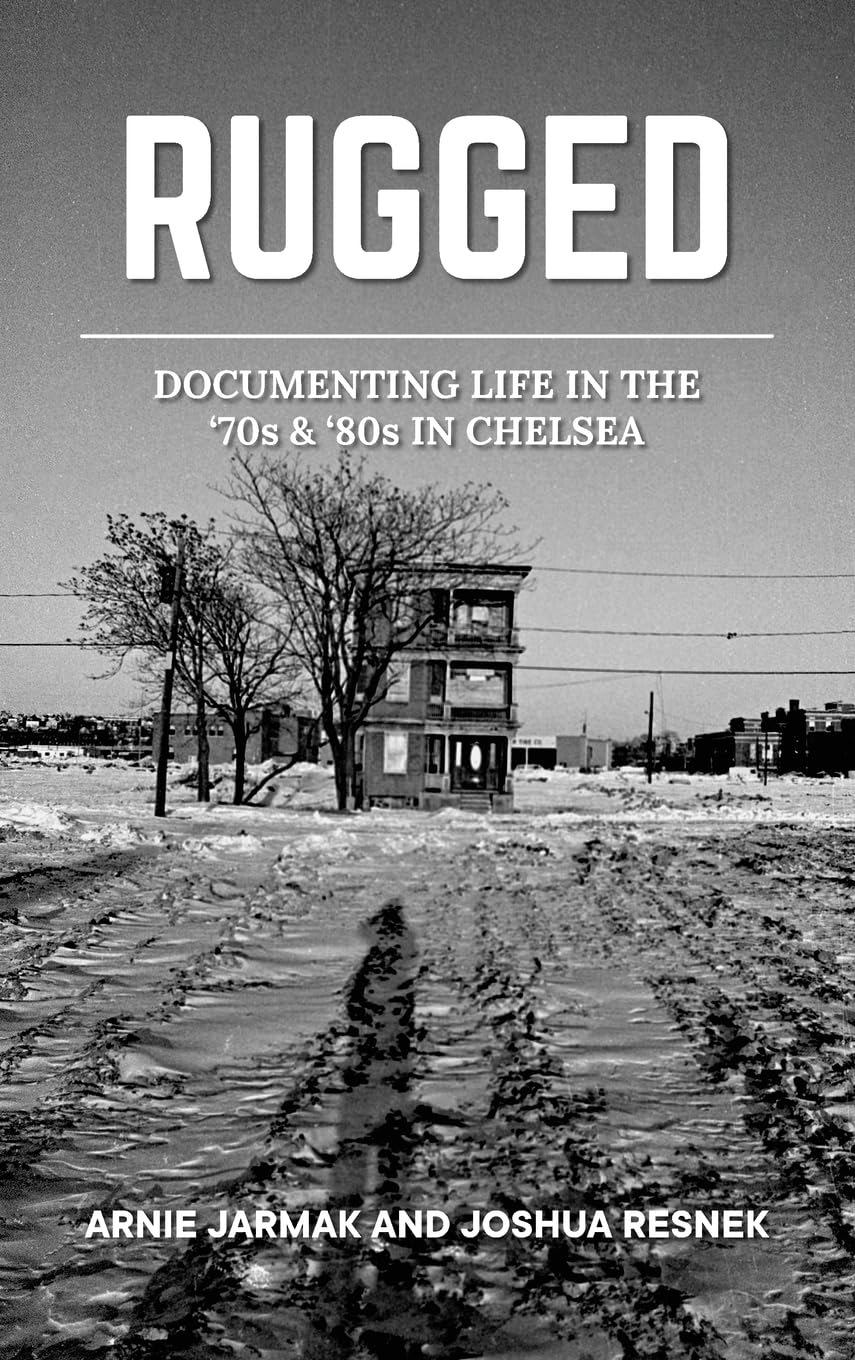
A solitary house in a cleared, snow-covered Chelsea landscape, detail from the official Rugged cover
Documentary photograph / approved Volume II cover detail

The built city is not background. It determines what can survive, what disappears and what must begin again.

Eleven bearings / sourced

The city
kept changing
01

1624 / 1739

Settlement and incorporation

A permanent colonial homestead was established in 1624. The harbor community remained agricultural for generations and became the independent town of Chelsea in 1739.

Source / City of Chelsea / Open Space Plan
02

1857

An industrial city

Chelsea received a city charter in 1857. By then, nineteenth-century industry and rapid population growth were remaking its shoreline, streets and working neighborhoods.

Source / City of Chelsea / Open Space Plan
03

Late 1800s–1920s

A city of arrivals

Successive immigrant communities built households, businesses and institutions close to the factories and the harbor. Chelsea became one of the most densely settled cities in Massachusetts.

Source / City of Chelsea / Housing Strategy
04

Turn of the 20th century

Little Jerusalem

Jewish immigrants made Chelsea a dense center of religious, cultural and commercial life—an urban community remembered as Little Jerusalem and sometimes called New England’s other Lower East Side.

Source / Jewish Heritage Center / Chelsea
05

April 12, 1908

The Great Chelsea Fire

Fire destroyed thousands of buildings and left roughly 16,000 people without homes. Reconstruction changed the physical city, but did not end the industrial pressures that had shaped it.

Source / City of Chelsea / Open Space Plan
06

1950s–1970s

Postwar fracture

The Tobin Bridge opened in 1950, displacing homes and cutting through neighborhoods. Industrial employment declined after the 1950s as work, housing and municipal stability changed with it.

Source / City of Chelsea / Open Space Plan
09

1989–2008

The BU school partnership

Boston University accepted Chelsea’s invitation to manage its public schools under an unusual partnership that began in 1989 and continued, through extensions, until 2008.

Source / Boston University / Chelsea Partnership
11

1994

A new civic structure

Chapter 103 of the Massachusetts Acts of 1994 established Chelsea’s council-manager charter. The governmental reset did not erase the crisis; it changed the structure through which the city would continue.

Source / City Charter / Massachusetts Acts of 1994

Promise / reality

The city kept
becoming.

Generations arrived, worked, built families and altered the city again. The Chelsea Series holds those transformations together without pretending the promise was ever simple.

Read the four volumes

Rights / contact

The story is bigger than the page.

Books. Press. Speaking. Historical archives. Screen and adaptation rights.

Contact the series